

Uganda has set its sights on becoming a regional hub for science-led development with the launch of the Eco-Satellite City Project, a flagship initiative aimed at transforming Nakigalala — located between Entebbe and Kampala — into a high-tech, eco-friendly urban centre.
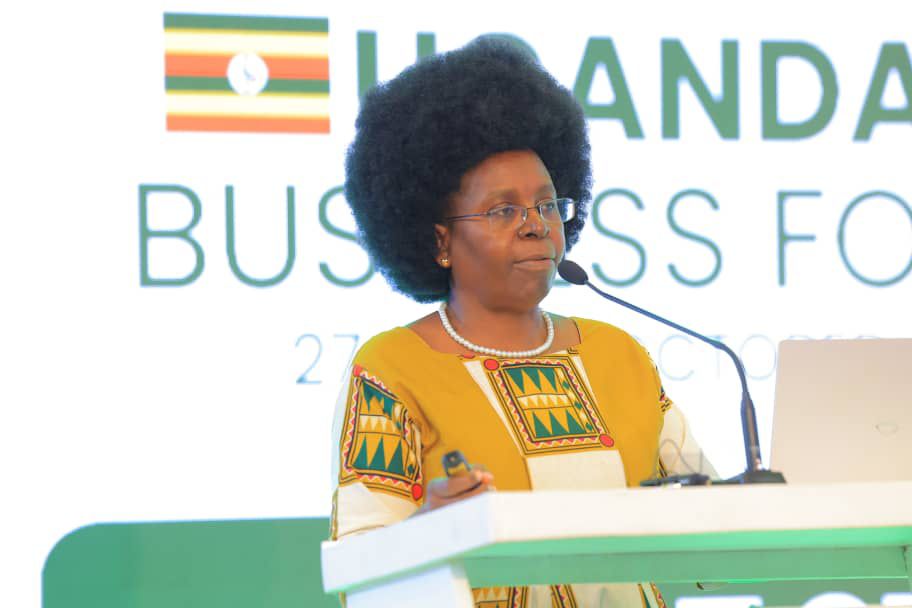
The project, championed by Minister of Science, Technology and Innovation in the Office of the President, Monica Musenero Masanza, was a major highlight of the Uganda–UAE Business Forum held at Speke Resort Munyonyo on Tuesday.
Musenero said the Eco-Satellite City will form the backbone of Uganda’s innovation-driven development agenda, creating a model for sustainable, technologically advanced cities across Africa.
“Through science, technology, and innovation, we can transform five dollars’ worth of raw materials into twenty dollars of value,” she said.
“This increase benefits both investors and the nation — creating new industries, skills, and opportunities for our people.”
The Nakigalala Eco-Satellite City is envisioned as a modern, smart business district integrating premium housing, eco-tourism, and electric public transport systems.
With land ownership issues now resolved, the project is moving into its next phase in partnership with Malaysia Inc. It is expected to ease congestion in Kampala while promoting sustainable urban living and investment.
Musenero said the initiative aligns with Vision 2040, Uganda’s long-term development blueprint that seeks to create a high-tech ICT city and infrastructure to support a knowledge-based economy.
Under the Mission Uganda framework, the government is pursuing transformative growth by embedding science, technology, and innovation (STI) across key sectors such as agro-industrialisation, pharmaceuticals, mobility, space technology, and mineral development.
“Our goal is to create new sectors while enhancing traditional ones,” she said.
“Science, technology, and innovation are not peripheral — they are the vessel for Uganda’s qualitative leap toward a ten-fold growth trajectory by 2040.”
Among the flagship projects under Musenero’s ministry is the Deep Tech Centre of Excellence, launched in March 2025 to build national capacity in artificial intelligence, quantum computing, and machine learning.
Uganda has also rolled out electric mobility pilot projects through Kiira Motors Corporation in Jinja, showcasing locally developed electric buses and charging infrastructure.
In biotechnology, the Day Biopharma Pharmaceutical Campus, now the largest of its kind in Africa, is producing affordable medicines for regional and global markets.
These efforts, Musenero noted, are supported by the government’s focus on Industry 4.0, infrastructure innovation, and smart manufacturing to expand local production capacity.
She underscored the state’s central role in advancing technological development through a clear national mission — defining strategic priorities, de-risking private investment, and building the technical capacity of Uganda’s young population.
“We are aligning policy, research, and investment to drive competitiveness,” she said, adding that Uganda’s surplus electricity and stable macroeconomic environment make it an ideal hub for high-tech ventures.
The minister also pointed to growing opportunities within the African Continental Free Trade Area (AfCFTA), which Uganda plans to leverage by linking local innovations to regional markets.
Structured mechanisms such as strategic procurement, public R&D programmes, and patient capital are being used to build a robust national innovation ecosystem.
Uganda is now actively seeking partnerships and investment to accelerate these initiatives, with pilot projects in electric vehicle manufacturing, pharmaceuticals, and agro-processing already proving viable.
“Our environment is naturally favourable for agriculture and manufacturing,” Musenero said.
“With technology, we can produce organic, high-value products for global markets. We invite investors to join us in scaling these initiatives and driving Uganda’s transformation.”
She concluded by reaffirming Uganda’s determination to position itself as a regional leader in science and innovation.
“Uganda is no longer the underdog. With intentional leadership in science, technology, and innovation, we are creating industries, generating wealth, and providing jobs for our youth. Together with our partners, we can harness technology to make Uganda a high-tech hub in Africa.”
